Government's Responsibility in the Age of AI
September 1, 2026


I've recently seen several articles on how AI is affecting government. It's something I've been thinking about for a while, and my involvement in Bussola Tech events has pulled me further into it.
It's time to weigh in. While the world debates the policies and regulations needed to address AI's risks and opportunities, I want to focus on something more fundamental: the responsibilities governments have right now.
It's easy to get swept up, excited about what's possible or fearful of the consequences. But governments need to focus on the immediate responsibilities in front of them. I'll break these into three categories: what governments must do, what they should do, and what they could do.
What Government Must Do
When AI platforms are trained, they ingest large volumes of static information from sources like websites, databases, and user chats. Where that information comes from, and how credible it is, matters. Governments have a responsibility to publish AI-ready information in a way AI platforms can use.
Years ago, it was fine to publish information online in a format only a human could read. Search engines changed that by requiring machine-readable formats. Now AI is changing the bar again. That creates new responsibilities:
- Be the source of official information. Governments must be the primary source for official information and must publish it so AI platforms can discover it, understand it, and ingest it accurately.
- Be discoverable and accessible. Information hidden behind a login or a form is invisible to AI platforms looking for static content. Unstructured formats have the same effect: a human might understand the document, but an AI platform training on a huge corpus of text will likely skip over it.
- Be meaningful. Governments need to understand how AI platforms learn. The way information should be structured and presented varies by content type. There's no single right answer, and the right answer keeps changing.
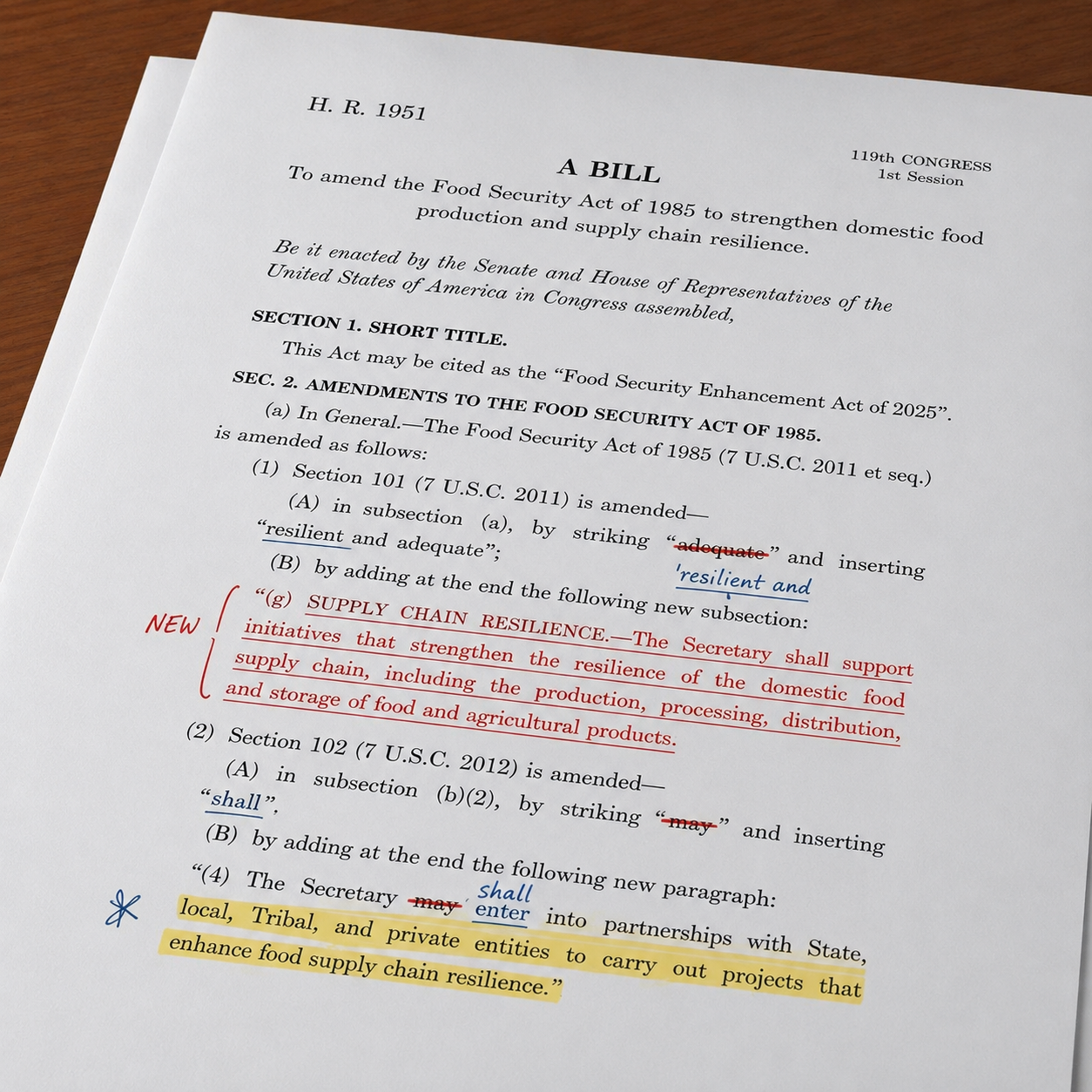
- Be accurate, timely, and clean. Published information must be current, correct, and free of anything sensitive that shouldn't be learned by an AI platform. Legislative documents can contain sensitive material; for example, notes protected by attorney-client privilege hidden in invisible comments. That needs to be stripped out before publication.
- Be trustworthy. Governments are responsible for being the trusted source of official information. That's a serious responsibility: publishing misinformation undermines government credibility and can cause AI engines to rank the government's information lower (accurate or not). And if government isn't a reliable source, unofficial and less authoritative sources will fill the gap.
What Government Should Do
The list above covers the minimum. Beyond that, governments should also:
- Be authentic. Being the source of truth isn't just about providing information; it means guaranteeing that what's delivered matches what was enacted into law or officially published, unaltered. Usually, it means providing digital signatures and ensuring encryption throughout the pipeline. However, this is a nuanced problem, and as far as I know, today's AI platforms don't verify digital signatures during training.
- Be authoritative experts. Government websites often provide bare facts without the supporting context that establishes expertise. Governments should consider how this affects whether AI platforms favor a less official but more authoritative-seeming source instead. That might sometimes be fine, but it can also open the door to harmful exploitation.
- Be genuine. Governments carry inherent public trust, so it's essential they avoid publishing synthetic or AI-generated content under the banner of being a source of truth.
What Government Could Do
AI platforms are trained on a large corpus of static information, producing a language model with general understanding. But for many tasks AI is used for today, that's not enough. Platforms also need up-to-date information, real-time events, and the ability to act through the services they connect to.
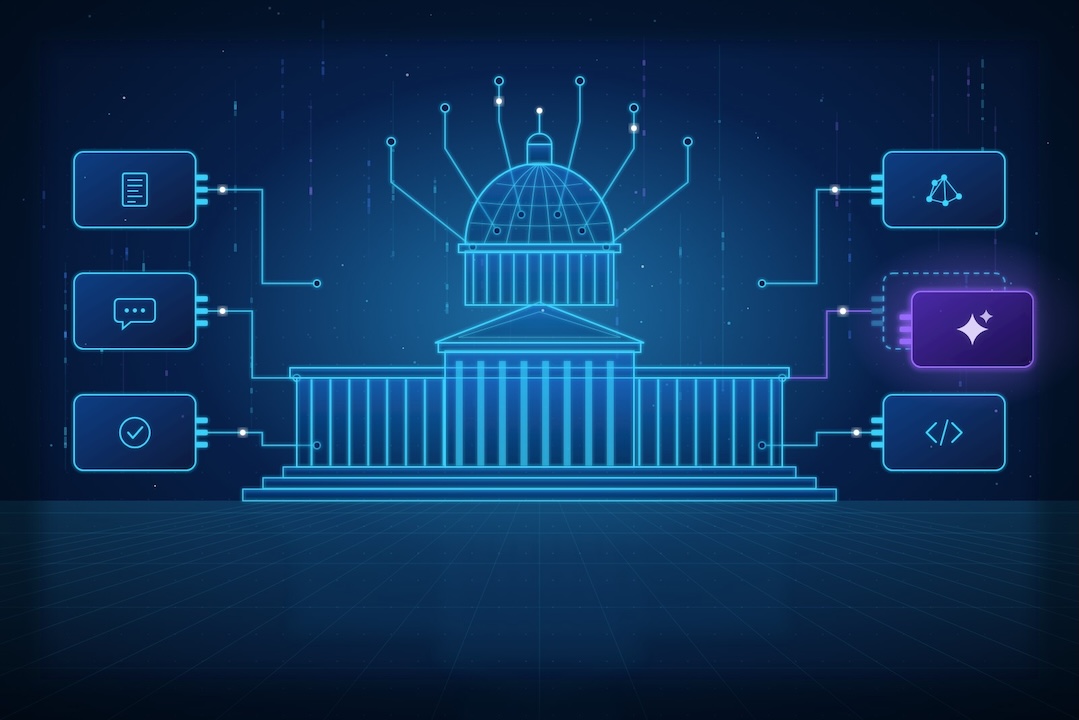
The Model Context Protocol (MCP) addresses this. Servers that implement MCP give AI applications three core capabilities:
1. Access to resources (note that this does not enable real-time learning)
2. Tools to execute APIs
3. Reusable prompt templates for specific tasks
This unlocks a lot for AI applications. It also means governments need to carefully think through their responsibilities in offering agent-ready services:
- Be harmless. Any time programmatic services are exposed (to humans or to AI agents) there's potential for exploitation. Appropriate safeguards need to be built in to ensure against an AI application going rogue.
- Be secure. Closely related to the last point, MCP servers need to be designed with security and privacy in mind. Information that is available to an MCP server should be separated from the internal operations entirely. The same considerations that apply to separating trusted internal networks from untrusted networks like the Internet using techniques like a DMZ (demilitarized zone) should be applied with building MCP servers if those servers are to be made public.
- Be useful. Exposing real-time information without thinking through how it will be used doesn't solve a real problem. It's worth noting that MCP servers aren't used to train an LLM, they only answer specific runtime questions. This means they can't be used to teach a model a new corpus of documents. Designing MCP servers that work well with AI platforms is a distinct skill that takes careful thought.
- Be cautious. Programmatic capabilities can reduce AI hallucinations by giving platforms access to information they weren't trained on. But this also creates the risk of AI answering questions it shouldn't; for instance, generating an artificial interpretation of the law that goes beyond what's officially published. Some things should still be handled by qualified humans. It is better to error on the side of caution.
In Conclusion
Governments have a responsibility to provide AI-ready information to the AI platform in a way that ensures the information is accurate, timely, and trustworthy. What is now emerging is the added need to provide AI-agent-ready services that provide access to real-time information and capabilities to AI-based applications. Rather than rushing to take advantage of these new capabilities, governments need to exercise caution to ensure that the new functionality they provide through these capabilities are useful and don’t have unintended consequences.
by Grant Vergotinni