Ex-post Legislative Scrutiny & AI Modernization
May 13, 2026


Ex-post scrutiny is one of the most important functions of modern democracies. AI offers new possibilities, but only if legislatures fix a foundational problem first.
In early June, Xcential will participate in a Bussola Tech panel titled “Possible Usage of Artificial Intelligence on Ex-post Legislative Scrutiny”. Before that discussion, Xcential wanted to lay out some thoughts.
What is “Ex-post legislative scrutiny”?
According to the Westminster Foundation for Democracy (WFD), it is
the examination and evaluation of legislation after the legislation has been enacted. This can include assessing the effectiveness of the law, identifying any unintended consequences, and making recommendations for changes or improvements. It can be conducted by government agencies, independent commissions, or other organisations.
The United States government has several institutions dedicated to evaluating the impacts of bills and enacted law. The CRS is dedicated to analysis of both bills and enacted law through reports that are manually constructed. The CBO serves Congress by evaluating the budgetary impacts of law. The OMB serves a similar function as the CRS and CBO, but for the executive branch and regulatory agencies.
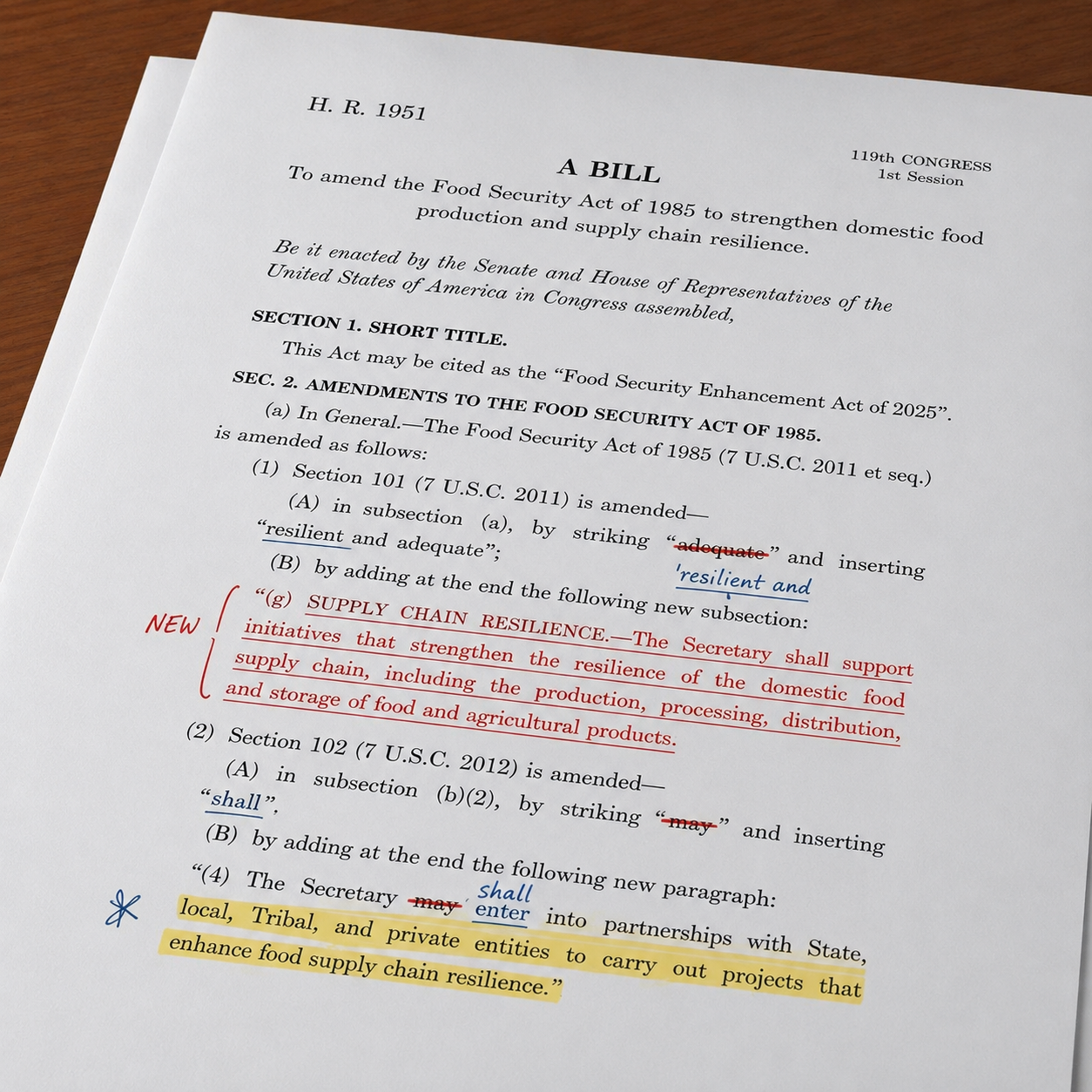
The Comparative Print Suite was developed by the US Congress to help members of the House understand changes to the law, if a bill is passed. The goal of this investment is to ensure members and the public know what amendatory language in a bill means to law. It is designed to create transparency and accountability.
These efforts, like many across the globe, are good for democracy.
Mike Flood (Congressional Representative of Nebraska) said about a recent bill:
“I am not going to hide the truth: This provision was unknown to me when I voted for that bill.”
Tools only matter if lawmakers use them; and if the underlying data is structured enough to make them effective. We can provide post-legislative analysis. Will representatives read and act on this analysis (given other influences)?
A real‑time, data‑driven scrutiny system would make it far harder for representatives to claim they didn’t understand what they voted for or whether the law achieved its intent.
Moving Toward Real‑Time, Data‑Driven Scrutiny
Is it possible to create a data-driven approach to post-ex legislative scrutiny?
It is possible. It is possible to create a powerful tool that evaluates first-order and second-order impacts. This would strengthen accountability and perhaps even convince representatives to become more responsive to citizens (instead of corrupting influences).
Yesterday, this looked like a herculean feat. But AI can help reduce the ongoing manual labor required to maintain such a complicated system. The system we imagine is not better qualitative, human-centered, analysis; but instead quantitative analysis based on data. Great strategy always requires both, but let’s focus on what software can do.
To establish the first-order impacts, we need to connect provisions in a law to data that’s directly affected by a provision. Taxes are a good example. If we change income tax to 90% for income over $200,000 (as it was in the US in 1950), we can connect that directly to government revenues based on historical data. So we need to connect a provision to existing data sources that are reliable and trustworthy.
It is easy to assume that raising tax rates from 30% to 90% would dramatically increase revenue. But maybe it doesn’t. Maybe citizens adjust behavior, shift income, or reduce taxable activity.
Changing the US tax rate from 30% to 90% for high-income individuals will also have a dramatic impact on consumer spending or housing costs. These are second-order impacts. There will be many second-order impacts that are meaningful. These are part of legislative intent.
A change in emission standards affects air quality directly (first-order) and public health outcomes indirectly (second-order).
These impacts do happen every day, we simply lack the systems to measure them.
Tagging provisions consistently across legislation is a challenge. Connecting these tags to trusted data-streams is another challenge. AI can help us with both.
However, most legislation and law is not “AI-ready”. To be “AI-ready”, law and legislative instruments must be published as structured data. Provisions should be machine-readable. Akoma Ntoso (AKN) is the industry standard designed to fix this.
AKN was useful before AI, but AKN-like structure is required for AI to be consistently good at understanding law and how laws are related to one another. LegalRuleML is a close cousin of AKN; designed with the intent of tagging rules or laws to be machine readable. It includes features like defeasibility. LegalRuleML is also an open standard.
Akoma Ntoso makes legislation and law “AI-ready”.
Without structured law, AI will continue to hallucinate and “fill-in the gaps” where it deems necessary.
AI is not reliable for everything. AI should not replace human-led, qualitative analysis. It should not draft bills or replace human judgement. Its value is in building the structured, deterministic systems that humans can trust.
AI can help us “set-up” quantitative analysis by applying approved structure into law and also helping connect that measurement structure to data-streams for qualitative analysis.
For example, AI can quickly create an ontology of tags for legislation and law. It can recommend where tagging should occur and implement tagging after human approval.
AI can convert data-stream end-points into formats that normalize the evaluation of large amounts of data. AI can be used to create queries and code used to build deterministic systems.
The idea is not to prompt AI for quantitative results. But instead to use AI to build components required for a deterministic system to run without AI. New legislation, new laws, and new data-streams can be incorporated and set-up with AI’s help in an ongoing manner.
Once a system is built that can measure first-order and second-order impacts for quantitative analysis; that same system can be used to project those impacts. We can and should move from “unknown to me when I voted” to “all the data says this is a good bill”.
Imagine an organization like CRS producing data-driven reporting in real-time for representatives and citizens. A system like this would greatly benefit qualitative analysis and give citizens a powerful tool to keep representatives accountable.
At Xcential, we believe these systems are possible and necessary for transparency, accountability, and democracy. LegisPro moves parliaments from unstructured documents to machine-readable data; aiding parliaments become truly “AI-ready”.
Structured law is the foundation. Without it, AI is unpredictable. With it, AI becomes a force multiplier for transparency, accountability, and democratic legitimacy.
In 2027, citizens may need these systems more than ever before.
by Marty Bickford