Legislative AI Strategy
December 3, 2025


What is your AI strategy? Are you an AI company yet?
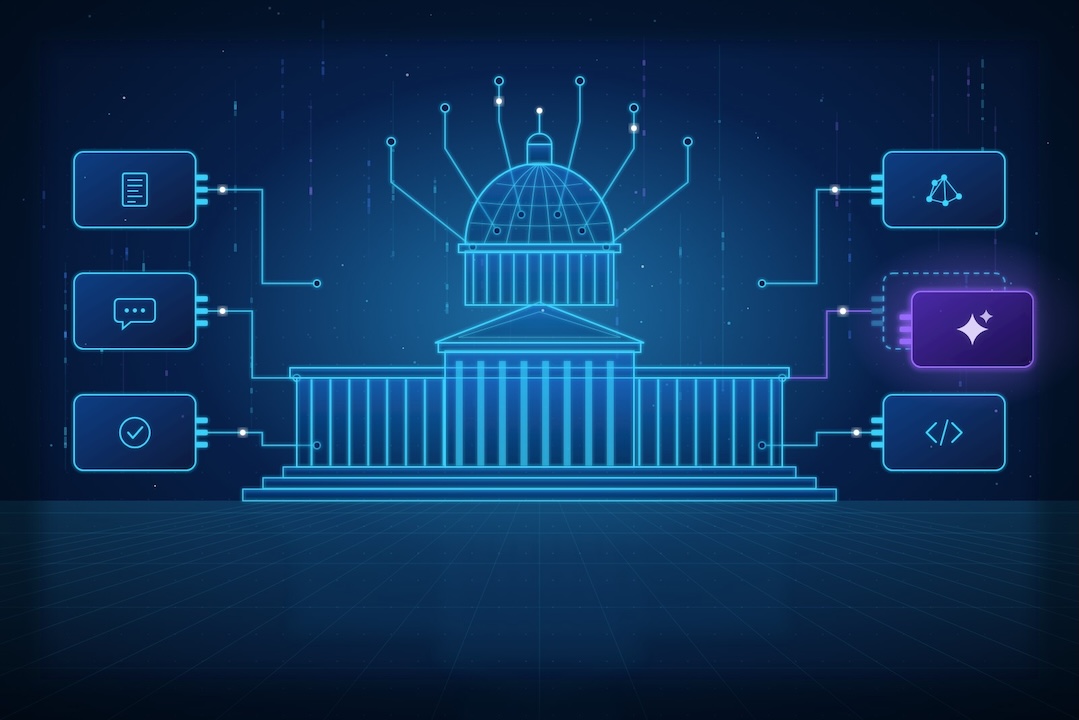
Every government today is asking: What is our AI strategy? At Xcential, while we may not be an AI company, our flagship product, LegisPro, provides the essential foundation for any successful legislative AI strategy. We believe the key to unlocking AI's promise isn't in the algorithm—it's in the data structure.
LegisPro is an application for drafters of legislation and regulation. It is highly configurable to match the document models, parliamentary procedures, and publishing requirements of most democratic legislatures.
While LegisPro is similar to a standard word processor in look and feel, the output is structured data in XML. The XML allows for machine-processing, resulting in automation and precision.
That structured XML is useful for AI to digest the information correctly. The structure helps AI understand the information.
Here is what Microsoft’s Copilot has to say on the topic: “Artificial intelligence thrives on structure. When legislation is expressed in Akoma Ntoso XML, the law is no longer just text—it becomes data. That structured representation allows AI to parse meaning, identify relationships, and reason over provisions with far greater precision than free‑form documents ever could.”
And here is what Google Gemini had to say: "The shift from unstructured text to highly structured formats like Akoma Ntoso (AKN) is not merely an upgrade in document management; it is a fundamental enabler for advanced AI applications in the legislative domain. By representing laws, bills, and amendments with semantic XML tags, Akoma Ntoso provides AI models with a contextual map of the document's structure, components, and relationships. This inherent structure allows AI to accurately identify specific sections, track amendments, and understand the 'anatomy' of the law in a way that is vastly superior to processing flat text, unlocking new possibilities for regulatory analysis, comparative law, and automated compliance checking. Structured XML is the necessary foundation for intelligent legislative processing."
Akoma Ntoso is not just XML; it's a semantic standard. The tags—like <article>, <section>, and <amendment>—provide explicit legal meaning and context. This is what allows AI to understand the 'anatomy of the law,' making it vastly superior to simply digitizing a document.
First Recommendation: Draft and manage legislation (and regulation) in Akoma Ntoso to get the best results from any AI application.
Is AI good at drafting legislation? How about transcribing debate? How about translating into another language? Should you use AI to create bill summaries?
AI can do lots of things. And there are lots of different types of AI; not all directly related to one another.
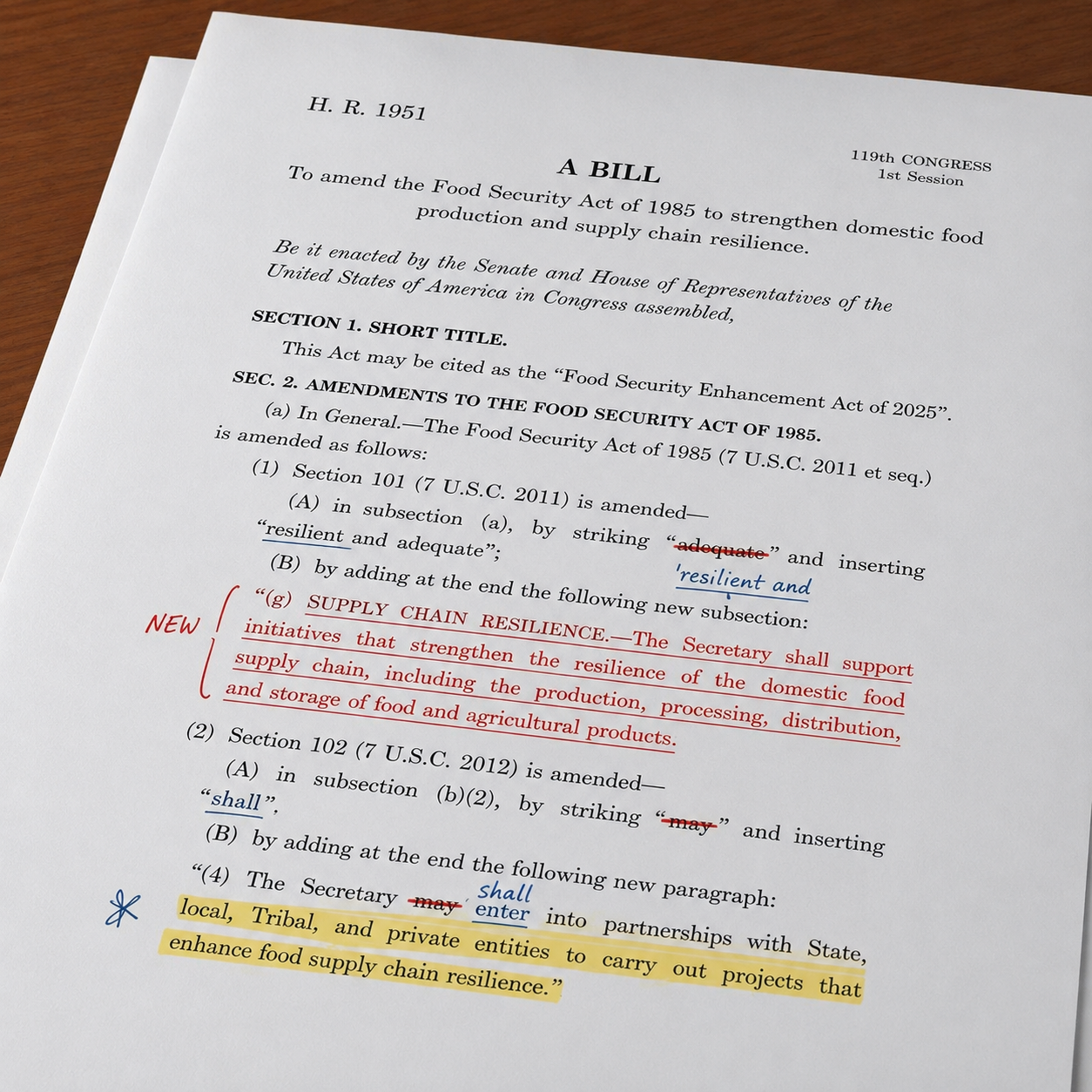
For example, Xcential worked with the Office of the Clerk of the U.S. Congress to build a bill comparison tool. This tool uses Natural Language Processing (NLP) and machine learning. Many would consider this AI.
NLP teaches computers to understand human language. Billions have been invested in NLP for decades because the promise is valuable. Google Translate, Amazon Alexa, and Apple’s Siri are examples of NLP in action.
NLP is not generative by default, it is simply the ability to understand language. When combined with machine learning, NLP becomes a powerful tool; like it has for the U.S. Congress.
Machine learning (ML) is another form of “AI”. ML isn’t magic, but instead deterministic and programmable. We know how it works and why it works the way we program it.
NLP and ML are both deterministic in nature. They are predictable and can’t “make stuff up”.
Generative AI (Copilot, Gemini, ChatGPT, etc) are non-deterministic. We can reproduce the environments for them to function, but we still aren’t sure why it works. It still seems to produce the unexpected and oftentimes unwanted result. This is not a bug, but a feature of generative AI. It guesses at common word combinations and can say things in a variety of ways.
Math and dates are obstacles for generative AI. It can’t do math. It doesn’t know the answer to 2+2. Instead, it sees what others have answered and predicts the answer. It is trained to know the answers, but doesn’t understand the concept of math. Dates (like enacting dates) are very meaningful in legislation and regulation, but they are just words to generative AI.
AI that is helping with science and medicine are specialized and usually closer to ML than generative AI.
Second Recommendation: Understand AI before applying it to important processes.
The combination of NLP and Generative AI is powerful. Chatbots have gotten better. Siri has improved and even Alexa is more interesting.
Analysts estimate that Amazon has invested tens of billions of dollars into Alexa. Why?
Because NLP could change the way humans interface with computers. As NLP improves (especially with the boost from Generative AI), the old “point and click” Internet could fall away. In the future, we’ll simply have conversations with the Internet. Generative AI is already showing us that we can ask follow-up questions, vibe code, and ignore the hyperlinks because the answer is given by AI.
The biggest breakthrough from this current AI bubble, just may be the interface itself.
RAG (Retrieval-Augmented Generation) is the powerful combination of these two AI types. It's like having a personal librarian who can not only summarize knowledge but can also make reliable connections between bodies of work. Crucially, RAG's effectiveness is directly dependent on the quality and structure of the documents it retrieves. When trained on structured Akoma Ntoso, RAG becomes a highly accurate and useful application of generative AI for legislative analysis.
So each type of “AI” can solve specific types of problems. And while AI has progressed in meaningful and impressive ways over the last 10 years, specific types may not continue to progress. Some technologies are good, but won’t incrementally improve.
Third Recommendation: Take advantage of what AI is good at, not what you hope it will be good at.
Democratic governments serve the will of the people. Efficiency is not a primary concern, even if in vogue.
95% of AI experiments fail.
So pick your projects carefully. Protect that which cannot be wrong. Let’s not invite AI into areas where it doesn’t create value or may disrupt staff. Our institutions are people, not machines or processes.
We all now know that AI is more accurate and just works better with structured data. Structure your legislation and regulation with Akoma Ntoso. You’ll not only get the benefits of AI, but you’ll also get automations, interoperability, traceability and transparency.
Final Recommendation: Make Akoma Ntoso the foundation of legislative modernization efforts.
A final thought from Microsoft Copilot:
“The future of legislative AI isn’t about replacing people—it’s about empowering them. When laws are drafted in structured formats like Akoma Ntoso, we unlock a foundation where automation, transparency, and intelligence can thrive. Legislatures that embrace structure today will be the ones that harness AI responsibly tomorrow.”
At Xcential, we believe structured drafting is the key to unlocking AI’s promise for legislatures. Structure first, intelligence follows.
Marty Bickford